Collision and IMPACT Ratings Reality Check: AEW’s Stacked Roster vs. TNA’s MoneyBall
The cable television landscape for professional wrestling continues to throw curveballs that would have seemed entirely implausible just a couple of years ago.
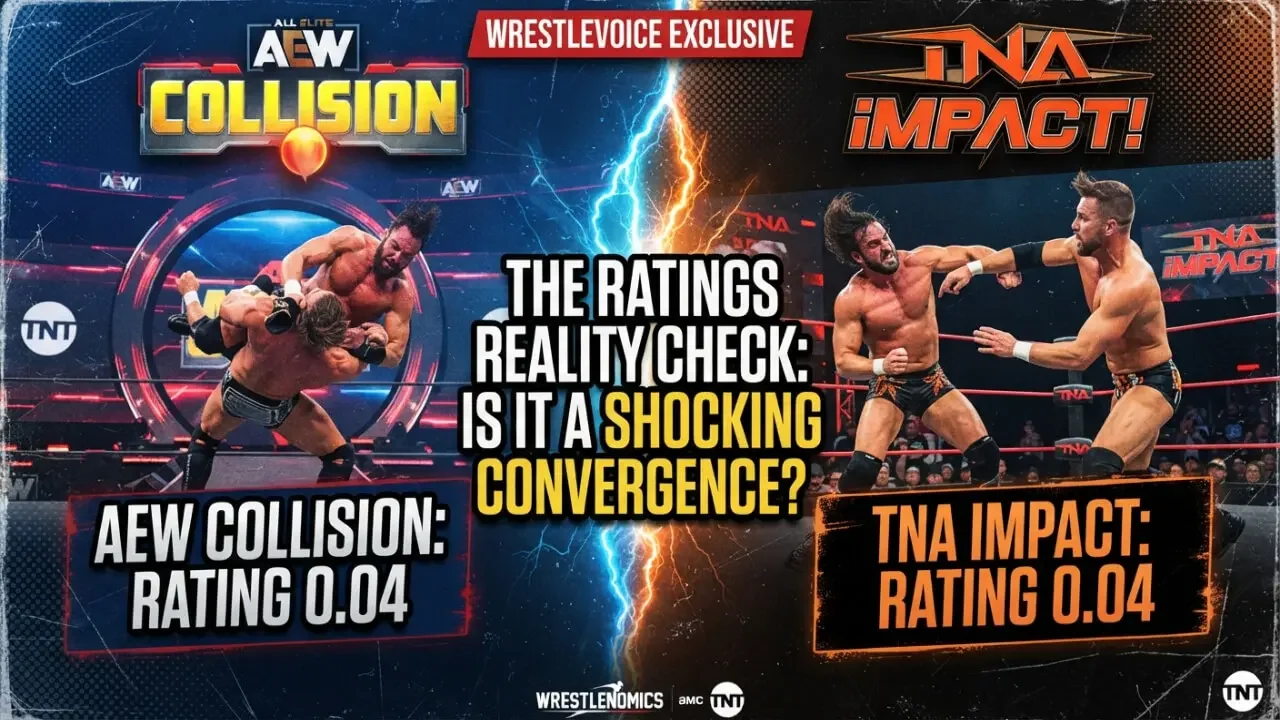
Looking closely at the numbers provided by Wrestlenomics for mid-September 2026 highlights a startling convergence that speaks volumes about current viewer habits, roster saturation, and the financial tightrope modern promotions are walking.
The Numbers Side-By-Side
To see AEW’s Saturday night show matching the exact same 0.04 key demographic rating that TNA pulled on Thursday night is nothing short of wild.
While Collision still holds a roughly 130,000-viewer advantage in total audience (337k to 207k), hitting the floor in the 18-to-49 demo right alongside TNA underscores a jarring trend for a show operating on a major cable network just a week out from a pay-per-view.
The TNA Equation: Waiver Wire vs. Wallet Protection
TNA has felt like it's running on fumes creatively for a while now—often leaning heavily on a revolving door of talent or "waiver wire" options (Moneyball style) rather than driving legitimate buzz. They aren't setting the world on fire, and the casual audience has largely responded in kind.
However, from a pure business perspective, maybe there's a method to the madness. While the on-screen product may lack momentum, they are saving an astronomical amount of money compared to the high-dollar, bloated expenditures of the past.
When you aren't paying out massive guaranteed contracts to support an oversized roster, a 207,000-viewer baseline on a niche cable footprint like AMC tells a different financial story than the massive overhead AEW was shouldering.
The Collision Conundrum
On the flip side, Collision hitting these numbers is a tough pill to swallow.
AEW built its secondary brand to feel essential, but between Saturday night fatigue, shifting viewing habits, and a general cooling off period, the show is regularly flirting with territory that blurs the line between major league cable and smaller-scale syndication.
Are we looking at an audience that is simply burnt out by the sheer volume of weekly wrestling content, or has Saturday night television finally proven to be an insurmountable graveyard for live sports entertainment?