ESPN/TKO Files Episode 5: Triple H Holds the Pencil, But Disney Owns the Eraser
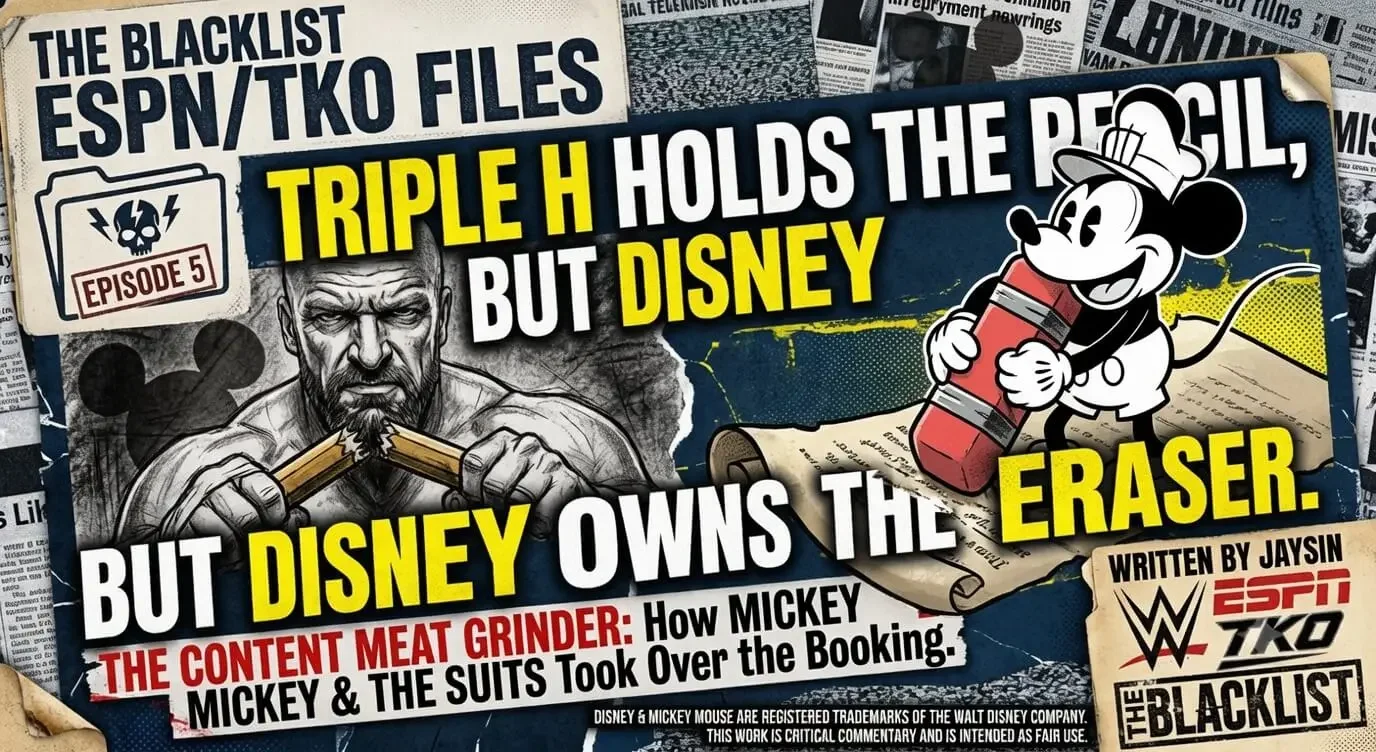
How the Mouse Overrode the Booker and Sent WWE into the Content Meat Grinder
Welcome to Episode 5 of the ESPN/TKO Fuckery Files. Over the last month, we’ve tracked the slow, corporate rot eating away at what’s left of professional wrestling’s soul.
Throughout this series, we have consistently hit on how the bottom line has completely overridden the actual product:
Episode 1: We exposed how WWE gladly imported toxic, fired ESPN executives because "connections matter more than community safety."
Episode 2: We pulled back the curtain on the spin machine, showing how ESPN instantly softened its journalistic coverage when controversy hit TKO's White House media events.
Episode 3: We broke down Mark Shapiro's prohibitive pricing models and how a looming $29.99 streaming paywall is designed to fleece the modern fan.
Episode 4: We showed you "Ad-Mania"—how premium live events are being turned into heavily sponsored commercial delivery vehicles where the actual wrestling is treated like a time-filler between Prime hydration ads and corporate plugs.
But if you thought those were just "growing pains" of a new television rights era, think again.
A new report from WrestleVotes Radio dropped a massive bomb that proves exactly who is actually booking WWE right now.
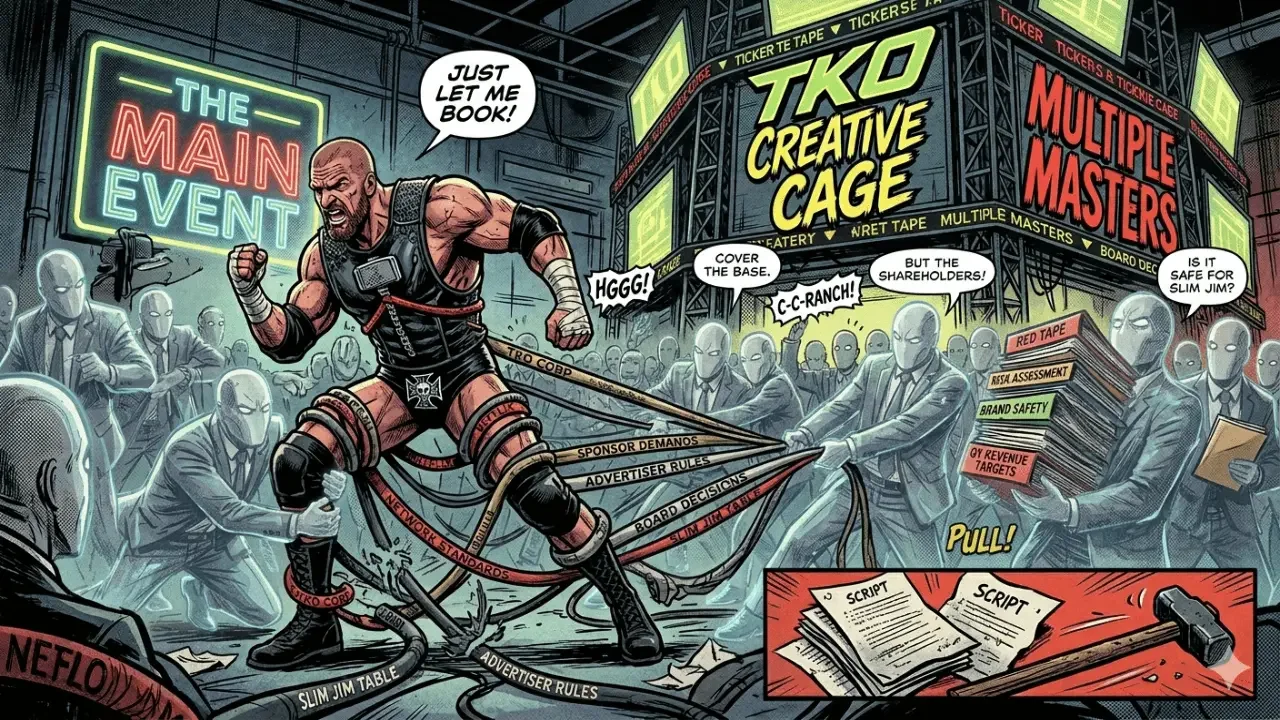
Spoiler alert: it isn’t Triple H.
It’s a room full of corporate suits at Disney and ESPN who look at a wrestling ring and see nothing but an Excel spreadsheet.
According to the report, ESPN explicitly approached WWE and demanded they change the fundamental architecture of their Premium Live Events. Why? Because the corporate algorithm required more meat for the streaming grinder.
Welcome to the corporate takeover. Let's pull back the curtain on how the illusion of "creative freedom" completely shatters when a network's subscriber retention goals are on the line.
The Big Illusion: "Autonomy" Stops at the Paywall
For the past year, the mainstream access-media has shoved a very specific narrative down your throat: “This is a new era! Triple H has total creative freedom! The product is allowed to breathe!”
And structurally, we saw what that meant. For the smaller, non-"Big Four" PLEs, the new regime strictly stuck to a tight, focused, 5-match card. It worked.
Matches had stakes, they had time, and the wrestlers didn't have to rush through high-spots to hit a hard television cue.
But then the ESPN rights deal kicked in, and the network introduced its current distribution playbook:
Air the first hour (usually the first two matches) "free" on traditional linear cable to hook casual sports fans.
Force viewers to migrate over to the paid ESPN Unlimited streaming app for the rest of the show.
Pat McAfee, nuff said.
It’s Basic Math
If the card only has 5 matches, and ESPN gives away 2 of them on cable, that leaves exactly three matches hidden behind the paid streaming wall.
ESPN’s executives looked at those numbers and panicked. To a television executive, a 3-match streaming window isn't a "premium live event"—it’s a weak incentive.
They realized subscribers could log in, watch three matches, and instantly hit "cancel subscription" before the next billing cycle.
So, what did the network do? Did they respect the "creative vision" of the booker? Did they care about long-term wrestling psychology or letting storylines build naturally?
Hell no. They flexed their billion-dollar muscle and told WWE to expand the cards.
Case Study: Stretching Night of Champions
We watched this play out in real-time at Night of Champions. Without any creative justification, a show that should have been a tight, elite showcase was quietly inflated to a 6-match card.
Two matches aired on cable, leaving four matches exclusive to the paid streaming app. ESPN demanded more content to justify their subscription price, and WWE immediately bent the knee.
Think about the dangerous precedent this sets. If a network can look at a card and say, "Hey, our subscriber data says we need 45 more minutes of paid content, go add a match," then the entire concept of organic booking is dead.
You get rushed feuds, thrown-together stipulations, and mid-card talent forced into high-pressure situations just to serve as filler for a corporate paywall.
We are officially transitioning out of the era of the curated premium event and right into The Content Meat Grinder. The network doesn’t care if a match is a 5-star classic; they just need hours of exclusive live content to manipulate their quarterly churn metrics.
The Absolute Silence of "The System"
What is most damning about this entire shift isn't just that ESPN is pulling the strings—it’s the absolute, deafening silence from the mainstream wrestling media.
In any other sport or entertainment industry, when a major broadcast partner forces a creative product to radically alter its structure purely to fight quarterly subscriber churn, it’s a front-page business story.
It gets analyzed, critiqued, and exposed. But in the professional wrestling ecosystem? Crickets.
The access-media reporters—the ones who pride themselves on having "sources close to the situation"—have spent the last year carrying water for the corporate office.
They sold you on the fairy tale of total creative autonomy because it keeps their press credentials active and their exclusive interviews flowing.
To admit that a room full of Disney data analysts can unilaterally override the booking sheet completely destroys the narrative they've been feeding their subscribers.
They won't tell you that the "New Era" looks identical to the old era, just with better lighting and an ESPN logo stamped on the corner of the screen.
The Bottom Line
When Vince McMahon ran the company, the enemy of creative booking was often one man's whims. Under the TKO and ESPN umbrella, the enemy is far more dangerous because it doesn’t have a face. It’s an automated spreadsheet.
When a television network treats professional wrestling like a meat grinder—demanding more minutes, more match counts, and more artificial length just to keep a user from clicking "Cancel Subscription"—the art form loses every single time.
The wrestlers are forced to stretch themselves thin, the fans are fleeced for extra streaming tiers, and the booker is reduced to a middle-manager taking orders from Bristol, Connecticut.
The curtain has been pulled back. As the title reads: Triple H might hold the pencil, but Disney owns the eraser.
Stay tuned for Episode 6, where we dive into the data privacy nightmare waiting for fans inside the new streaming ecosystem. Until then, keep your eyes open, because the suits aren't even trying to hide it anymore.