The Million-Dollar Coward: Why Hollywood Hogan’s Heel Psychology Was Masterful
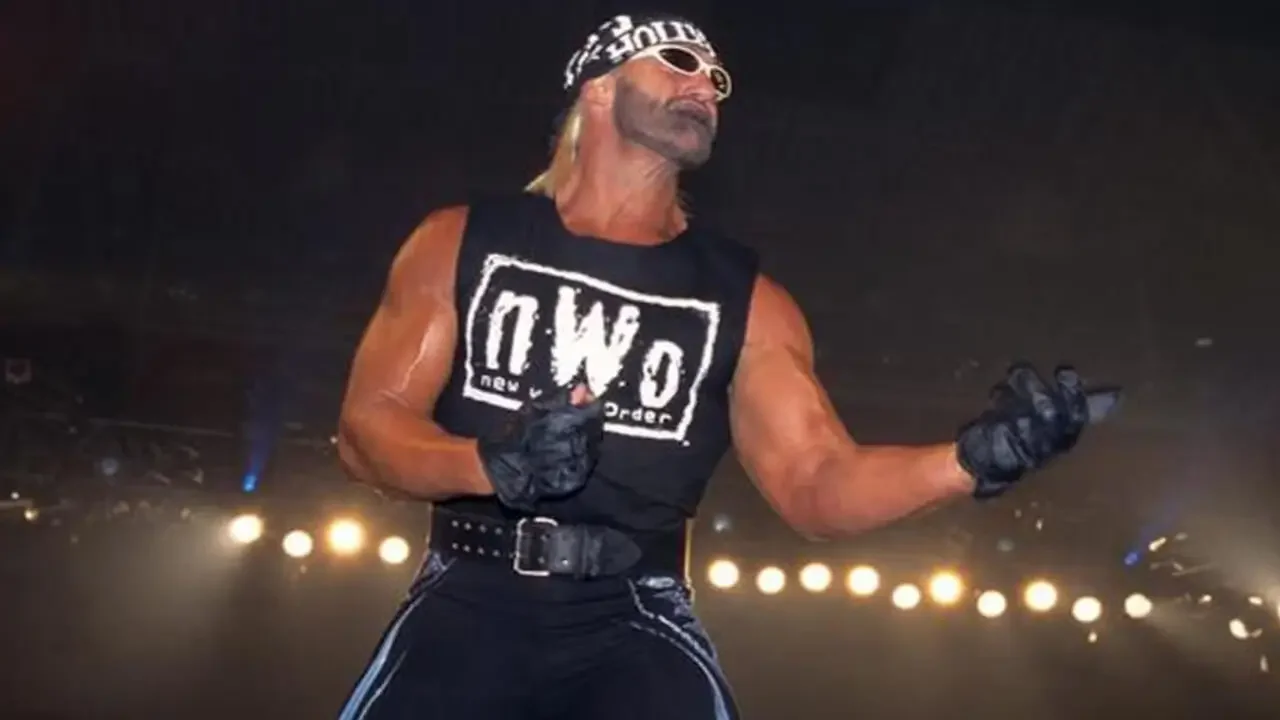
When we talk about the greatest heels in professional wrestling history, names like Ric Flair, Roddy Piper, and Vince McMahon always dominate the conversation.
But there’s an argument to be made that the absolute gold standard of heel psychology belonged to a guy who spent the previous fifteen years telling kids to eat their vitamins: Hollywood Hulk Hogan.
While the historic 1996 heel turn at WCW: Bash at the Beach gets plenty of love for its shock value, the actual work Hogan did after the turn—the pure, unadulterated cowardice—doesn’t get nearly enough credit.
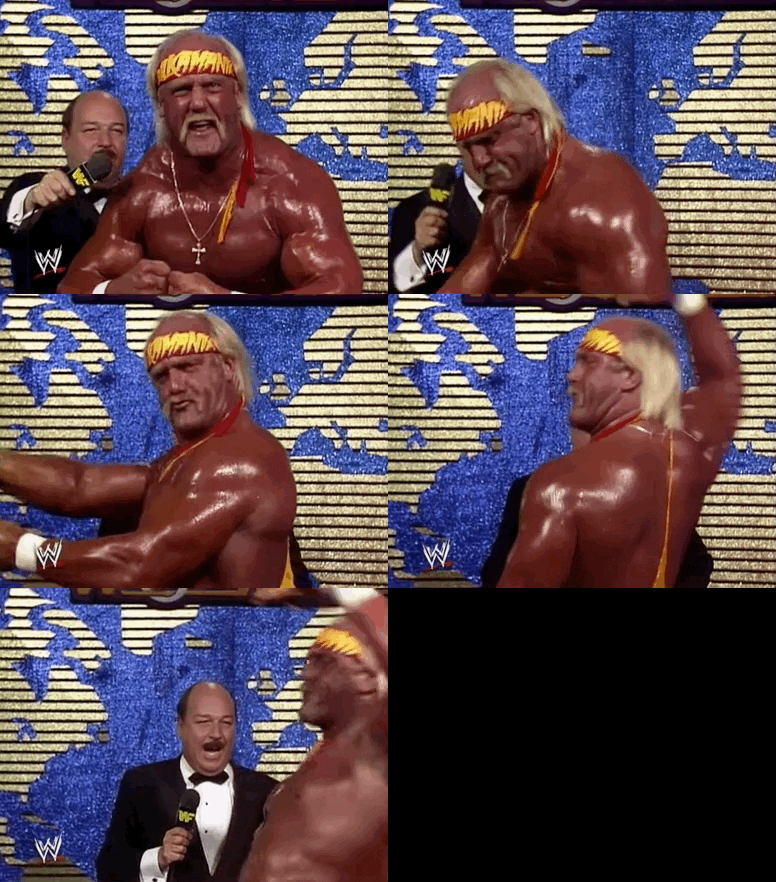
For an entire generation of fans, Hulk Hogan was an immortal powerhouse who never backed down, never showed fear, and could "hulk up" past any beating.
When he jumped ship to the nWo, he didn't just become a generic bad guy; he completely checked his massive ego at the door to play a classic, text-book chicken-shit heel.
Think about the visual: You have a 6'7" powerhouse with 24-inch pythons, flanked by a literal army of the baddest dudes in the industry (Scott Hall, Kevin Nash, and forty other nWo members).
Yet, the second the lights flickered or Sting dropped from the ceiling with a baseball bat, Hogan would completely hyperventilate, bug his eyes out, and drag Eric Bischoff in front of him as a human shield.
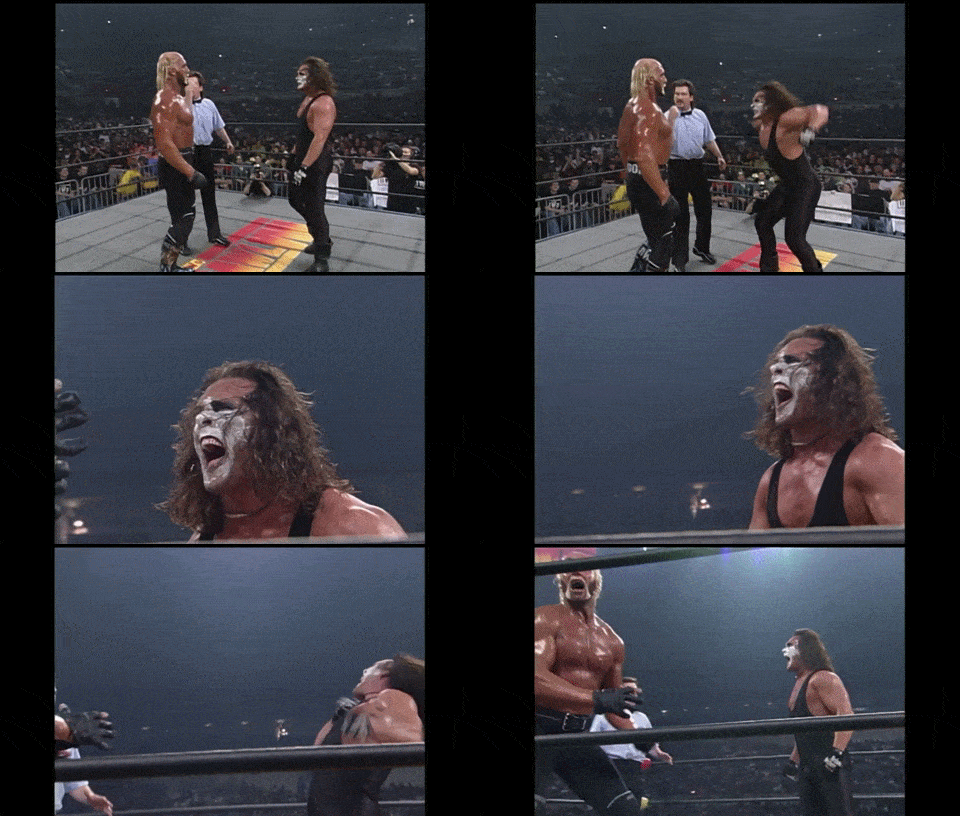
It was absolute psychological genius for three major reasons:
The Nuclear Heat: It infuriated the fans on a different level. They didn't just want to see him lose because he was a villain; they wanted to see him get his ass kicked because he was acting like a total punk.
The Myth-Building: By acting legitimately terrified of Sting, Hogan single-handedly built the "Crow" character into an unstoppable, mythical weapon without Sting even having to wrestle a match for 18 months.
Hiding the Limitations: Playing a vulnerable snake allowed Hogan to protect his physical limitations at that stage of his career, letting the chaos of the nWo do the heavy lifting while keeping the focus entirely on the drama.
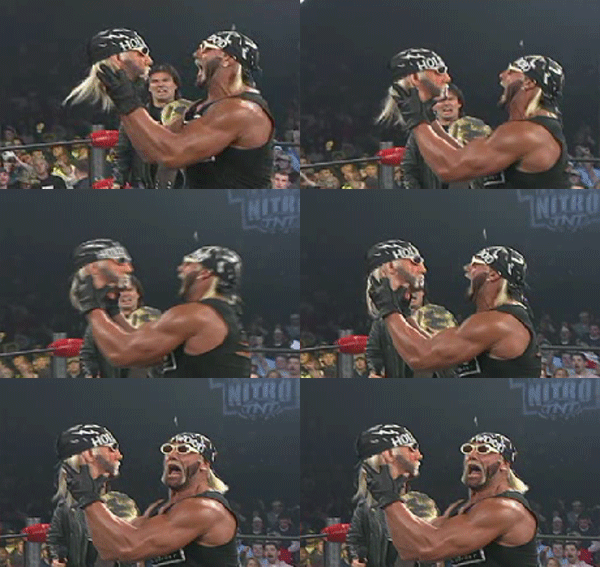
The Billion-Dollar Paradox
If you measure wrestling greatness by the only metrics that actually keep the lights on—pay-per-view buys, live gates, merchandise, and cultural impact—Hogan has a bulletproof case for being the best to ever do it on both sides of the curtain.
He was the sole catalyst for the two biggest financial booms the business has ever seen, carrying the industry through two entirely different decades for two bitter rival promotions.
The Hogan Blueprint:
1984–1992 (WWF): The ultimate babyface who mainstreamed the business and launched WrestleMania.
1996–1999 (WCW): The cowardly antagonist who triggered the Monday Night Wars and forced WWE to completely reinvent itself to survive.
The Verdict
A lot of modern heels want to look cool, hit spectacular moves, and get cheered by the "smart" fans. Hollywood Hogan understood that a true heel's only job is to make the crowd pay their hard-earned money to see them get destroyed.
He ran away screaming, he hid behind his friends, and he used every dirty trick in the book. And that is exactly why, thirty years later, we are still talking about it.