WWE’s Mr. NXT Pageant: Fun Filler or Forced Framing?
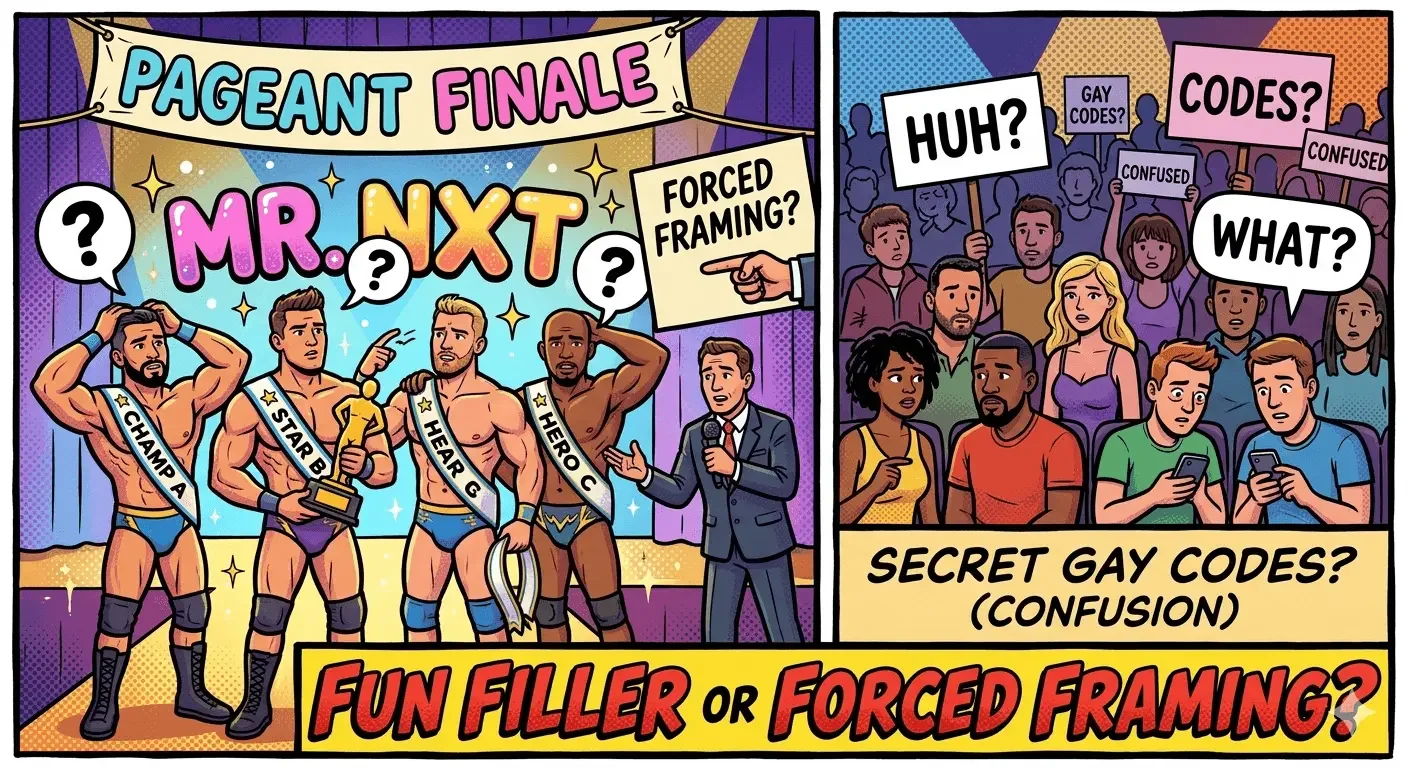
As someone who’s followed wrestling for decades — through the wilder Vince McMahon era, the Attitude days, and into the more corporate TKO landscape — I caught wind of the recent “Mr. NXT” pageant segment on NXT and felt… confused.
Not outraged, not offended, just a bit lost on what exactly they were going for. And I’m not anti-gay. Far from it.
But the way this played out, and especially how it got covered afterward, left me wondering if straightforward booking has become a lost art.
The Segment Itself
It was a classic wrestling comedy bit: two NXT guys, Tristan Angels (the arrogant, polished heel) and Shiloh Hill (the quirky underdog), competing in a “Mr. NXT” pageant as part of their rivalry.
Categories included attire (yes, including swimsuits), talent portions, and interviews. Guest judges were brought in: WWE star Kit Wilson, out gay comedian Matt Matthews, and Aaron Rourke — the openly gay Evolve Men’s Champion known for his “Evil Gay” persona.
Rourke had some exaggerated reactions (mouth agape during the swimsuit part), Matthews threw in a “finger clap” from ballroom/LGBTQ house culture, and it ended with Shiloh winning via fan vote, followed by the obligatory post-match beatdown to advance the feud.
Pure sports entertainment filler — goofy, low-stakes, and designed to get laughs while giving Rourke some TV exposure.
This isn’t new territory for wrestling.
We’ve had flamboyant characters, beauty contests, bodybuilder bits, and gender-bending gimmicks since the Gorgeous George days in the 1940s, through Adrian Street, Goldust, and plenty of others.
Exaggerated masculinity, pretty boys, and campy humor have always been tools for heat or comedy.
It’s 2026 — audiences aren’t shocked by this stuff anymore.
The Spin That Followed
Where it gets tricky is the framing from outlets like Outsports. Their article celebrated it as “one of its gayest segments in years,” highlighting the “gay-coded” moments, Rourke’s identity, and the cultural nods as some kind of milestone.
WWE itself didn’t promote it that way in their recaps or highlights. They booked a silly pageant with colorful judges and let the characters do their thing.
That’s what feels “sneaky” to me. Not the inclusion of an openly gay wrestler earning his spot (Rourke’s title win was historic in its own right), but layering in specific reactions and references and then letting friendly media run victory laps with it.
It risks turning organic character work into checkbox representation. Wrestling thrives when it’s unapologetically weird on its own terms — not when it feels like it’s winking at one demographic while pretending it’s just neutral filler.
My Take as an Older Fan
I’m not pining for 1990. Times change, and having openly gay talent like Rourke on TV is progress from the stigma of earlier eras.
But “sneaking” cultural elements into every comedy bit, only for it to get amplified as groundbreaking, can come across as forced rather than fun.
Just book good stories, strong characters, and let personalities shine without the extra narrative layers.
Wrestling has always been over-the-top. The best version doesn’t need heavy external framing to tell us what we’re watching. It just is.