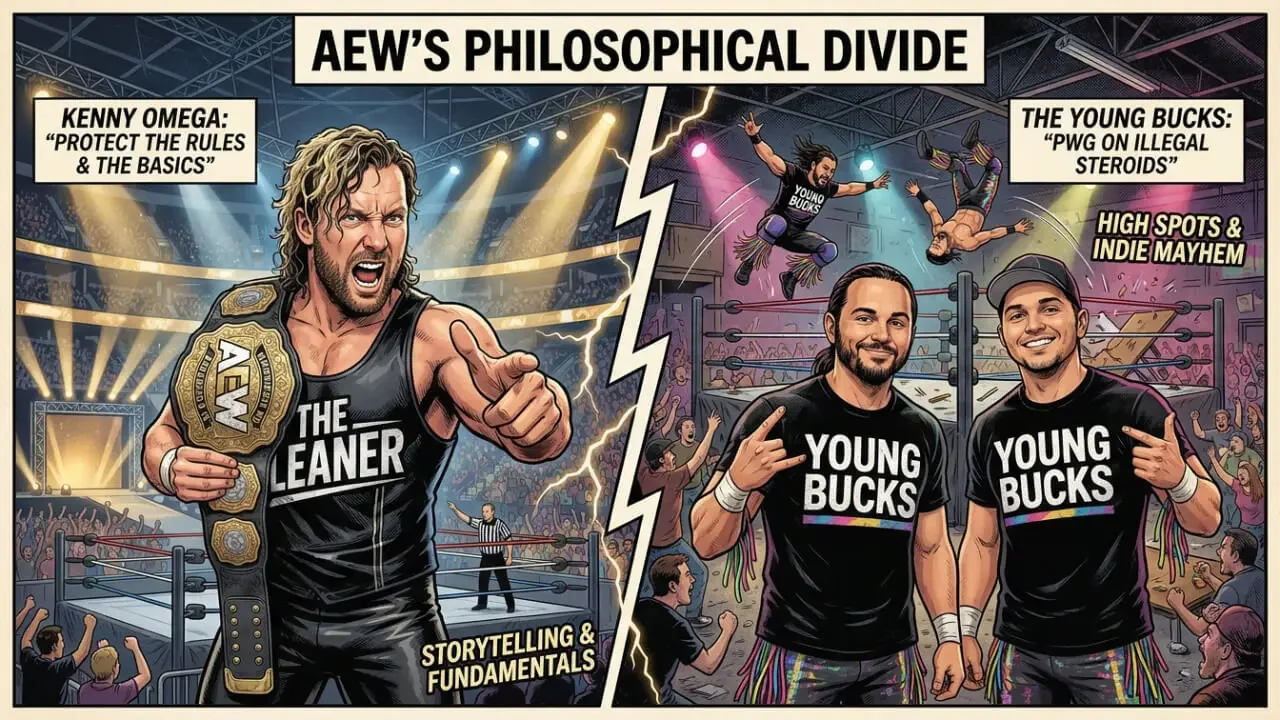
For years, fans and critics debating the identity of All Elite Wrestling have treated The Young Bucks and Kenny Omega as twin pillars of the same creative worldview.
Both carry Executive Vice President titles, both rose to global prominence outside the WWE system, and both helped shape AEW’s early reputation as a high-octane alternative.
Recent interviews, however, suggest that the two sides are no longer pulling in the same direction—if they ever truly were. In a Being The Elite Q&A, Nick Jackson proudly framed AEW as "PWG on illegal steroids," celebrating high-energy, spot-heavy booking as the fulfillment of their original vision.
Days later, in a New Japan Pro-Wrestling (NJPW) interview building toward his IWGP Heavyweight Championship challenge against Yota Tsuji at Wrestle Kingdom 21, Kenny Omega sounded a very different note—pointing to the G1 Climax final between Yuya Uemura and Ryohei Oiwa to argue for the value of wrestling fundamentals, emotional pacing, and avoiding reckless violence.
Put side by side, those two comments highlight a real tension over what makes wrestling work—and what kind of identity AEW is projecting right now.
Nick Jackson’s Vision: "PWG on Steroids"
In the Being The Elite Q&A, Nick Jackson offered a candid look at what he and Matt Jackson originally set out to build with AEW.
Describing the promotion as "PWG on illegal steroids"—and noting that booking PWG-style matches remains central to their vision—Jackson leaned straight into the chaos, speed, and crowd-pleasing spectacle that defined Pro Wrestling Guerrilla at its peak.
For fans who loved PWG in Reseda, that formula had clear appeal:
Unfiltered freedom and high energy: Wrestlers could push pace, sequence big moves rapidly, and keep hot crowds buzzing without rigid corporate constraints.
Spectacle over structure: Matches frequently escalated into high-risk exchanges and rapid-fire sequences designed to pop a live room.
At the same time, critics have long argued that scaling a niche indie blueprint to national television carries trade-offs.
What feels electric in an intimate venue can feel repetitive or exhausting over multi-hour broadcasts if every match leans on the same high-spot escalation or blurs the line between standard bouts and all-out wars.
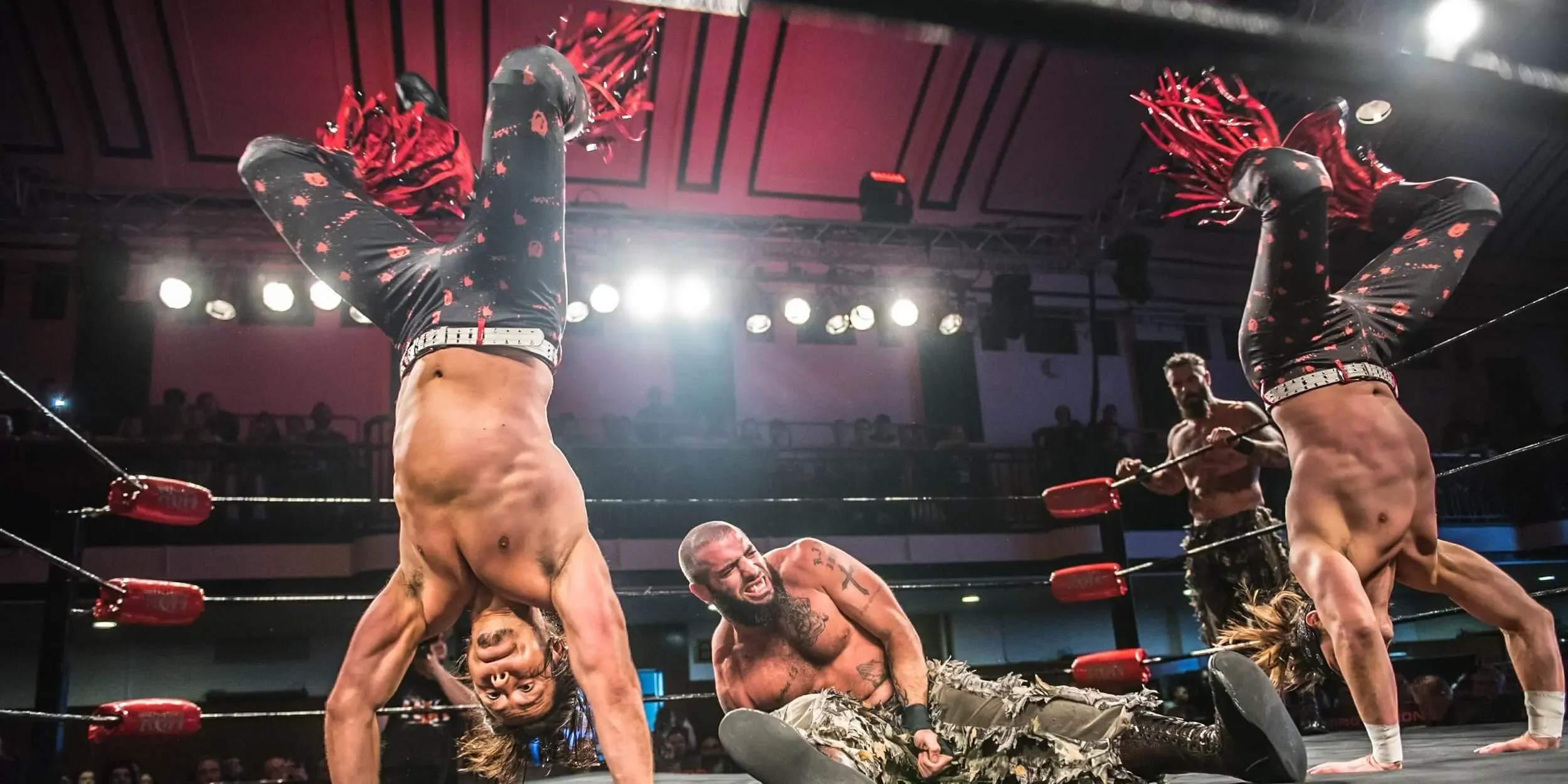
TF am I looking at? LOL Dancing Bucks
Kenny Omega’s Counter-Weight: Fundamentals, Pacing, and Rules
Speaking to NJPW ahead of his January 4, 2027 Tokyo Dome title shot against Yota Tsuji, Omega struck a noticeably more reflective tone.
Asked about the buzz surrounding the G1 Climax final between Yuya Uemura and Ryohei Oiwa, Omega praised how much emotion the two generated through basic techniques and distinct personal styles—contrasting that with AEW wrestlers risking life and limb every match and drifting away from core fundamentals.
Omega’s remarks touch on three key pillars of traditional match craft:
Strong foundations over shock value: Core holds, strikes, and transitions carry weight when wrestlers aren't rushing past them just to get to the next big spot.
Emotional connection and pacing: Giving space for psychology and crowd reaction lets moments breathe rather than feeling like a nonstop sequence of moves.
Physical longevity and risk management: Pushing extreme danger week after week takes a heavy toll on bodies—something Omega, having navigated major health hurdles of his own, is acutely aware of.
When an established top star and EVP argues that fundamental wrestling can draw real investment without constant life-or-death escalation, it directly challenges the "more is more" mindset that Nick Jackson celebrated.
Why This Matters Heading Into 2027
With Wrestle Kingdom 21 approaching at the Tokyo Dome and AEW continuing to navigate its on-screen identity, this philosophical split gives fans and analysts plenty to watch. Does AEW double down on the high-velocity PWG energy that built its core niche, or does it lean harder into disciplined storytelling, enforced rules, and pacing that gives big moments room to mean more?
Either way, the gap between "PWG on steroids" and "back to the basics" has become one of the most compelling storylines—both on screen and behind the curtain—in modern pro wrestling.